
The cheapest thing you can add to a finished landscape
A patio, a wall and new planting are real money — and for half the year you can't see any of it after six in the evening. Lighting puts those hours back. It's almost always the least expensive element of an outdoor project and the one people say they'd have done first.
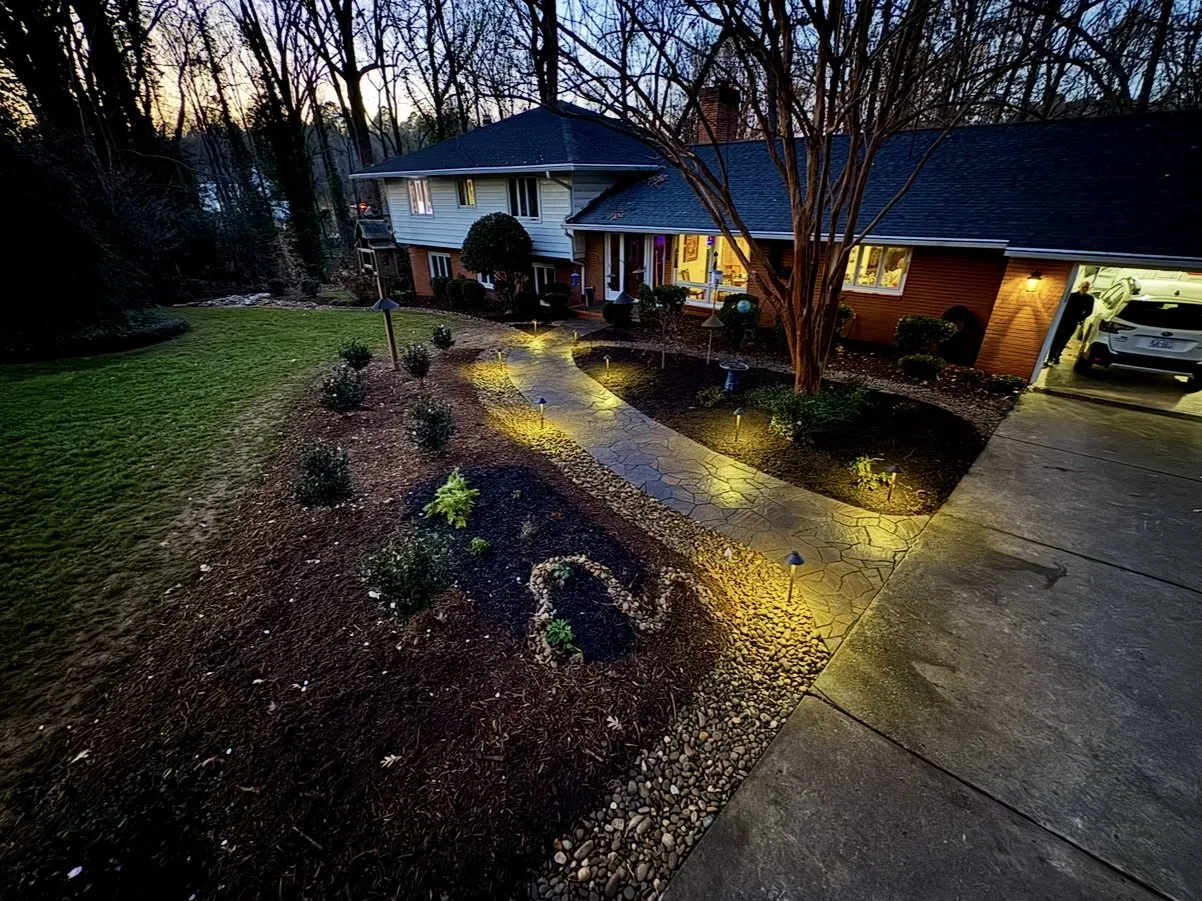
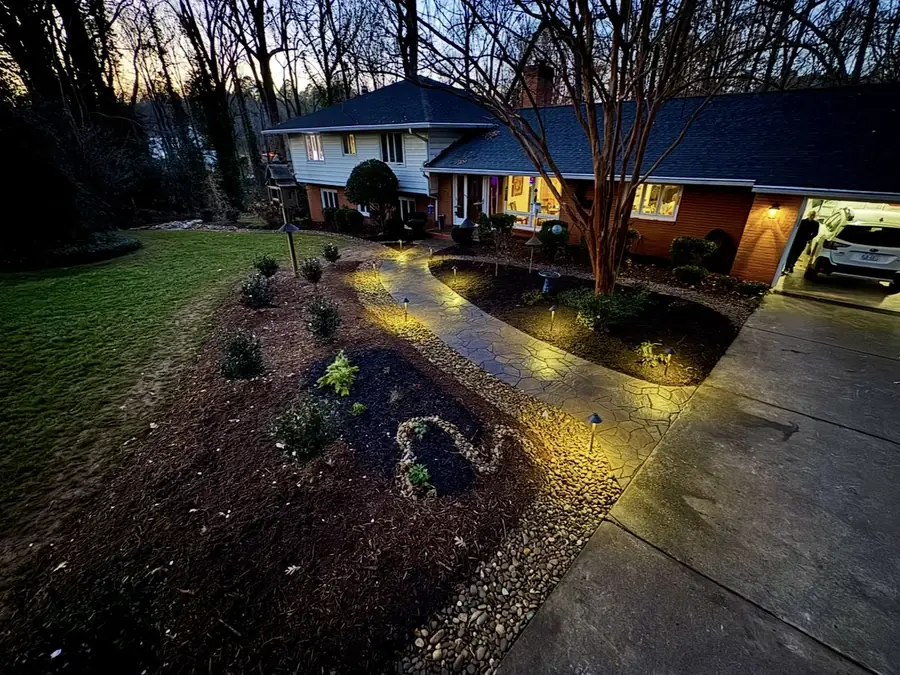
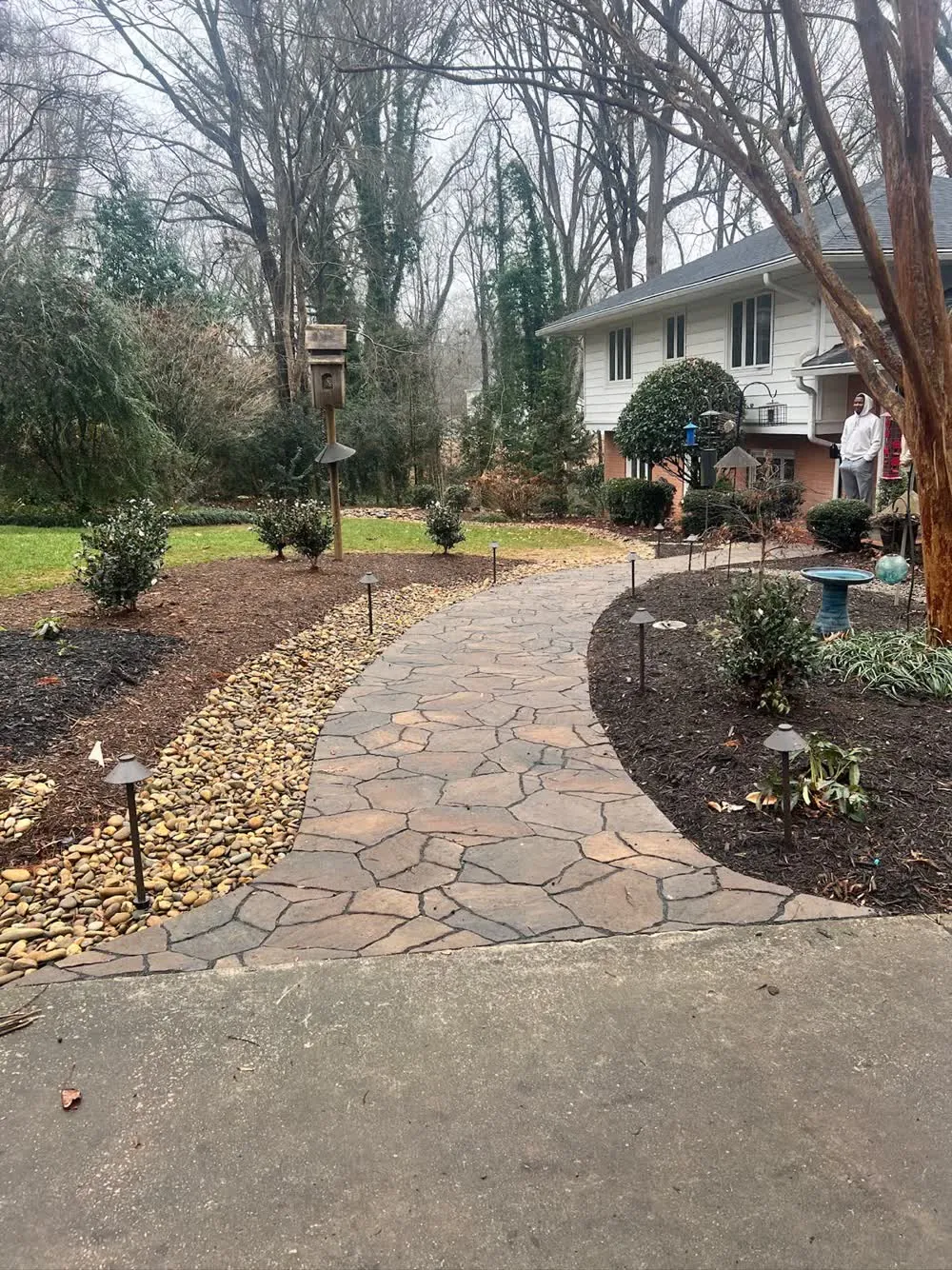
- Path and walkway lighting
- Uplighting on trees, columns and architecture
- Hardscape lighting built into seating walls and steps
- Step and riser lighting on grade changes
Lit, not glaring
Bad lighting is a row of identical fixtures marching up both sides of a walk, all shining into your eyes. Good lighting is restraint and aim — fewer fixtures, warm colour temperature, sources tucked behind planting.
The goal is that a guest notices the house looks good and never notices a fixture.
What it costs
Most lighting packages run $2,500 to $9,000.
The transformer gets sized with headroom, so adding a zone next year is a short job — not a restart.
- Fixture count is the main driver
- Long runs and multiple zones add wire and labor
- Adding to an existing low-voltage system costs less
Landscape lighting questions we get
How much does landscape lighting cost?
Most lighting packages run $2,500 to $9,000. Fixture count is the main driver; long wire runs and multiple zones add to it. Adding onto an existing low-voltage system costs less.
Do I need an electrician for landscape lighting?
Usually not. Low-voltage (12V) systems run from a transformer that plugs into a standard outdoor GFCI outlet. If there's no usable outdoor outlet where the transformer needs to go, an electrician adds one first.
Can you add lighting to a landscape that's already finished?
Yes — lighting is one of the easiest things to add after the fact. We size the transformer with headroom so you can add zones later without starting over.
Is LED landscape lighting expensive to run?
No. LED fixtures use a small fraction of the power old halogen systems did, and they last far longer.
Warm or cool light — which looks better on a house?
Warm white. It flatters brick, stone, siding and plants, and it reads as inviting instead of commercial. We aim fixtures so you see the house and the planting, not glare.