
Why new sod dies
Most failed sod around here failed for the same few reasons. It was laid on hard clay that roots can't get into, on ground that holds water in the low spots, and then it wasn't watered enough in the first two weeks. The grass was fine. The ground under it wasn't ready.
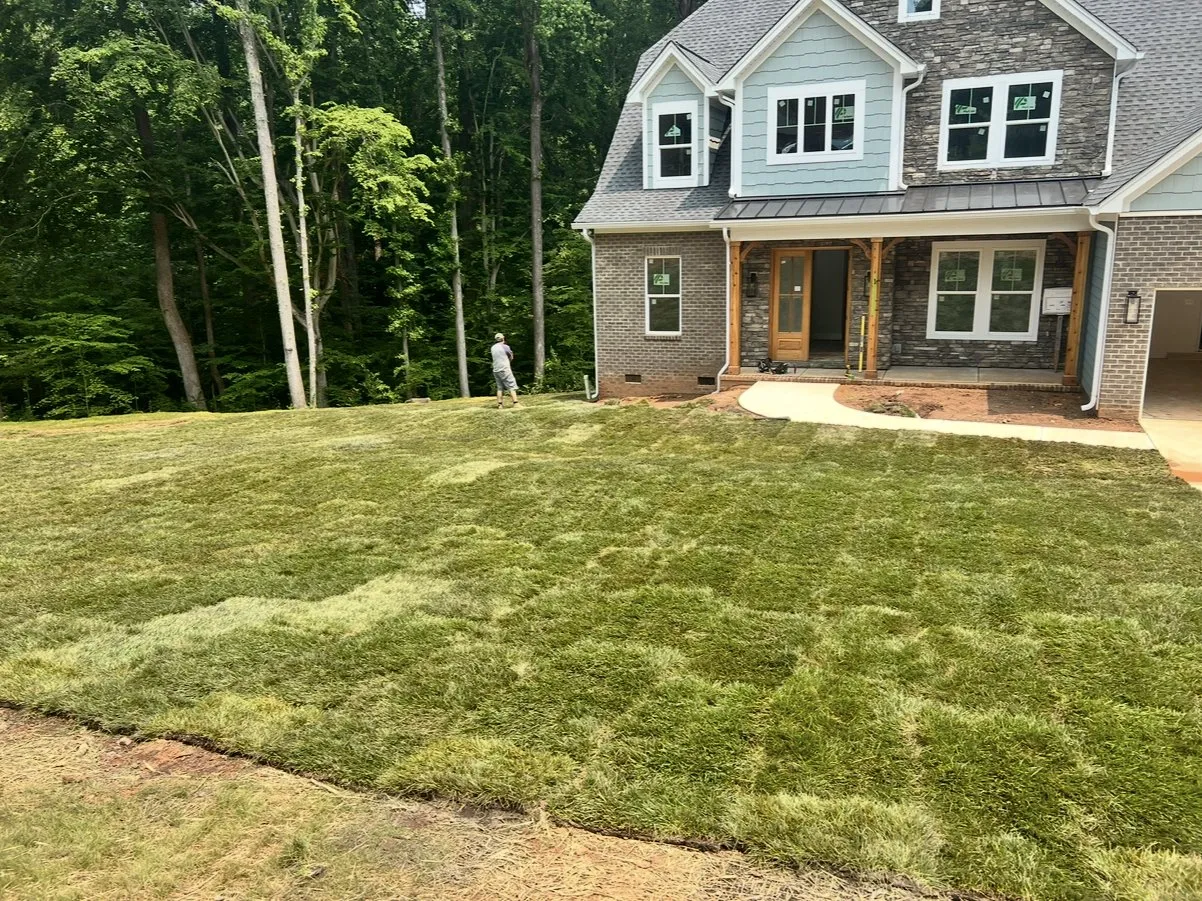
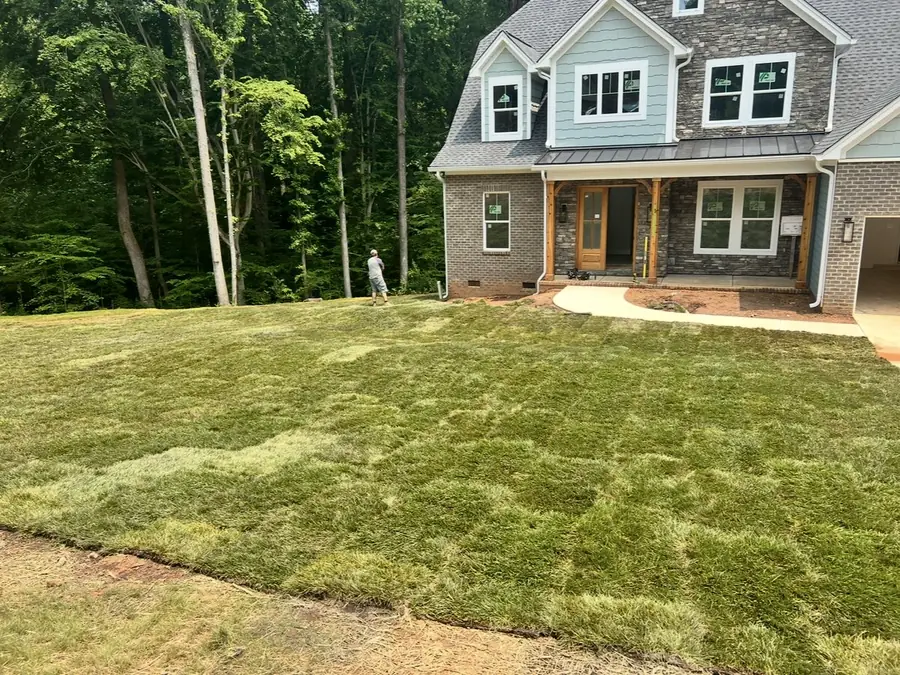
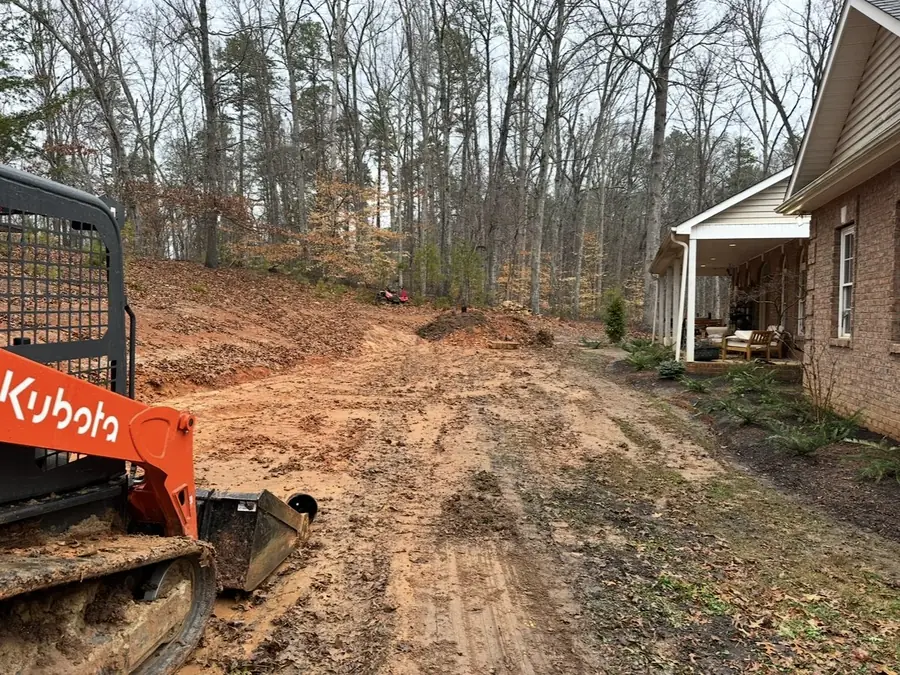
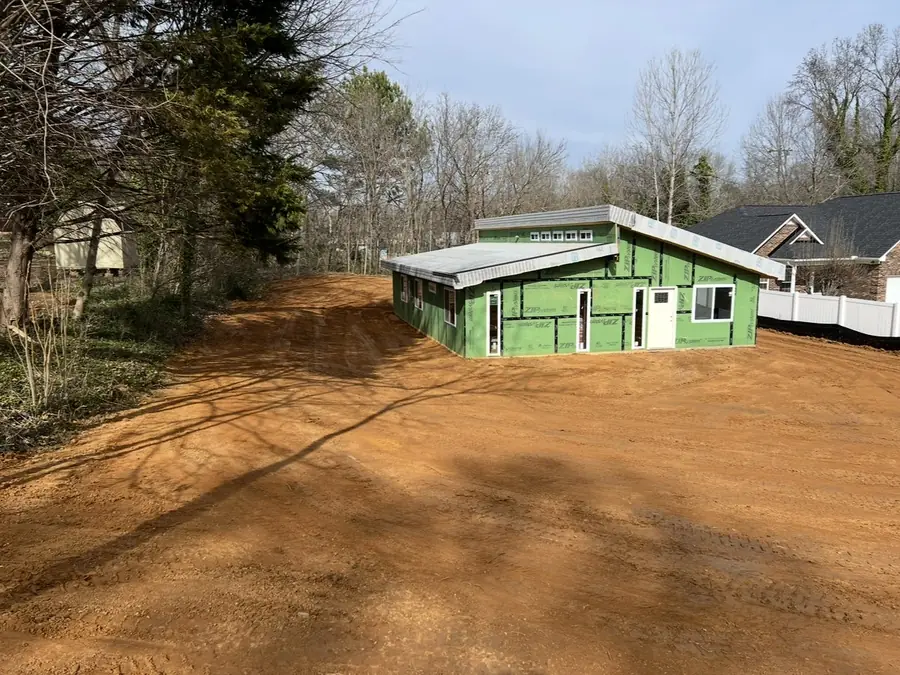
New-construction yards are the worst for this. Equipment packs the soil hard, a thin layer of topsoil goes on top, and the roots never get past it.
How we put down a new lawn
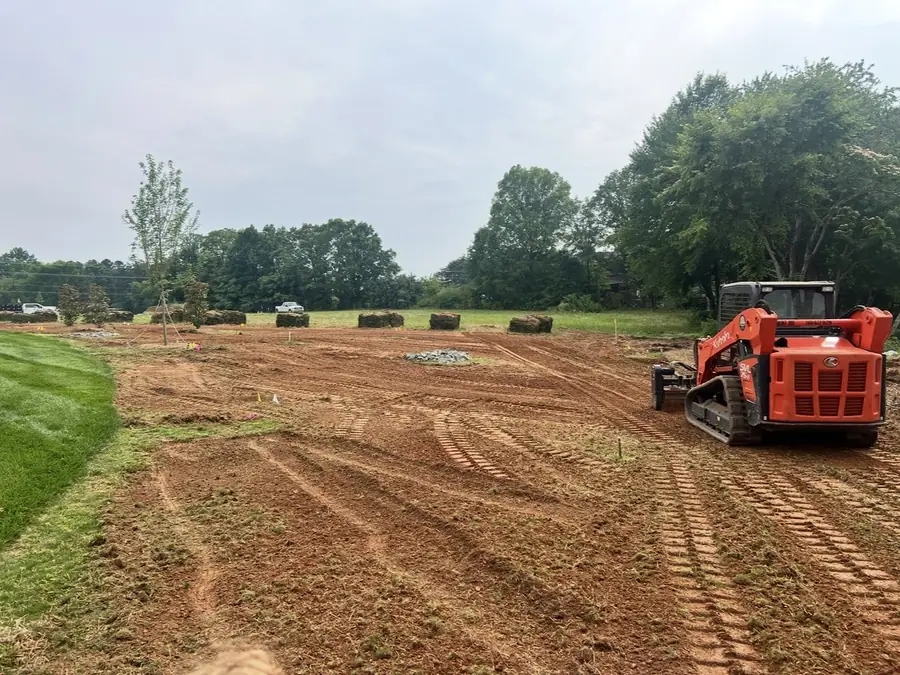
- Strip the old turf, weeds and debris
- Fix the grade: fill low spots and pitch the ground away from the house
- Bring in soil where it's thin and loosen what's packed
- Rake the final grade smooth
- Lay the sod with staggered seams and tight edges
- Roll it, water it in and hand you a watering schedule
Fescue, Bermuda or zoysia?
Tall fescue handles shade and stays green through the winter, which is why it's on so many lawns around here. It does need a little help getting through the summer heat. Bermuda wants full sun, spreads fast and recovers from wear quickly, but it goes brown when it's dormant in the winter. Zoysia is dense and soft underfoot, grows more slowly and costs more.
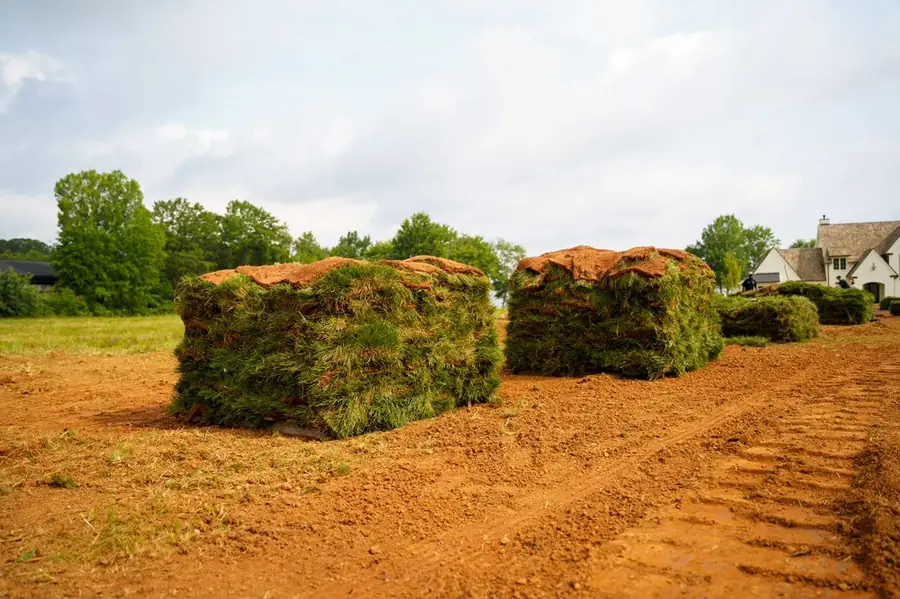
The right one depends on how much sun the yard gets and how you use it. We'll tell you which fits before you buy a single pallet.
What it costs
Most sod installs land between $2,000 and $6,000.
Sod alone runs about $1.60 a square foot installed. With grading and fill dirt, closer to $3.
- Square footage is the biggest factor
- Grading, fill dirt and fixing low spots add to it
- Tearing out an old lawn and tight access add time
Sod questions we get
How much does sod cost in Gastonia?
Most of our sod installs land between $2,000 and $6,000. Sod alone runs about $1.60 a square foot installed. If the yard needs grading and fill dirt first, it's closer to $3 a square foot. After a free visit you get an exact, itemized number.
When is the best time to lay sod here?
For Bermuda and zoysia, late spring through summer, while they're actively growing. For tall fescue, fall is best, with early spring second. Sod can go down for much of the year as long as it's watered, but frozen ground and the peak of summer heat are hard on fescue.
How soon can I walk on new sod?
Keep traffic off it for about two weeks while the roots take hold. A good test is to gently lift a corner. If it resists, it's rooting. The first mow is usually around two to three weeks in, on a high setting.
How much should I water new sod?
For the first week or two, keep the soil under the sod moist every day. That usually means watering daily, and more than once in hot weather. Over weeks three and four, cut back to deeper watering a few times a week. You get a written schedule when we finish.
Should I sod or seed?
Seed costs less, but it takes months to fill in, fescue seed really only works in the fall, and rain washes it off slopes. Sod gives you a finished lawn the day it goes down and holds a slope right away. For a new build, a bare patch near the house or anything on a grade, sod is usually worth it.