
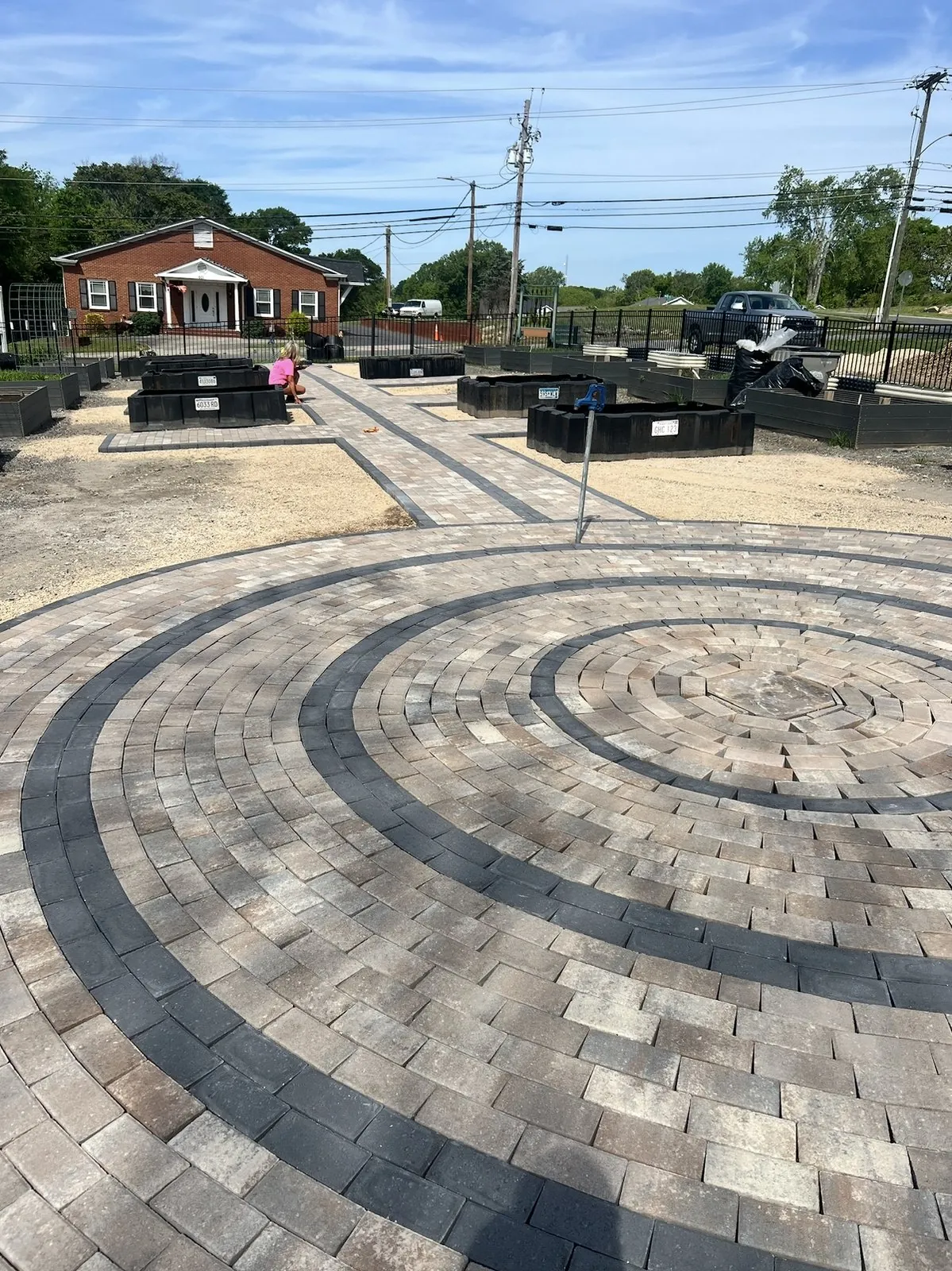
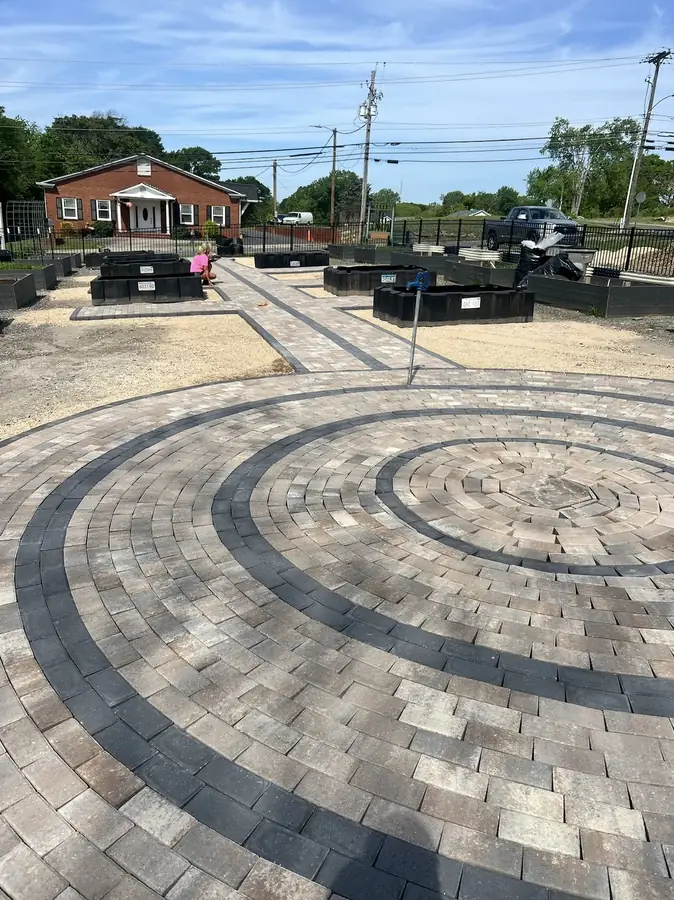
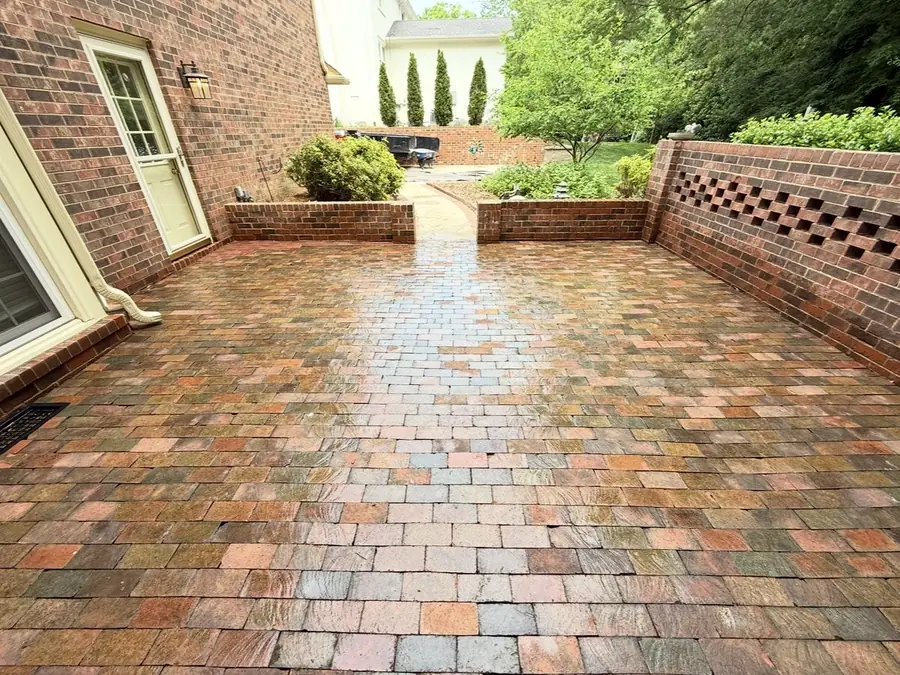
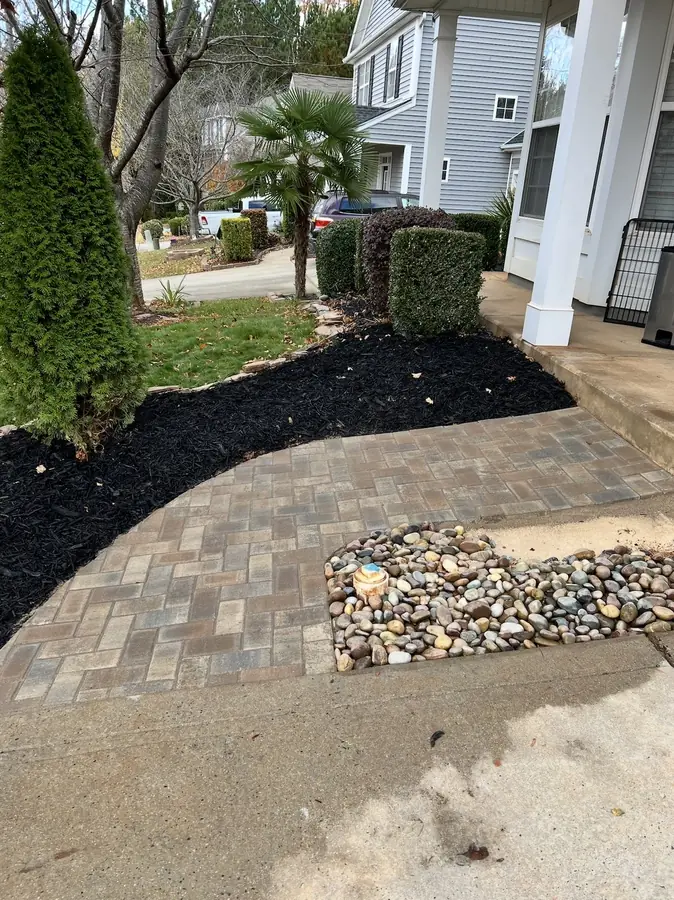
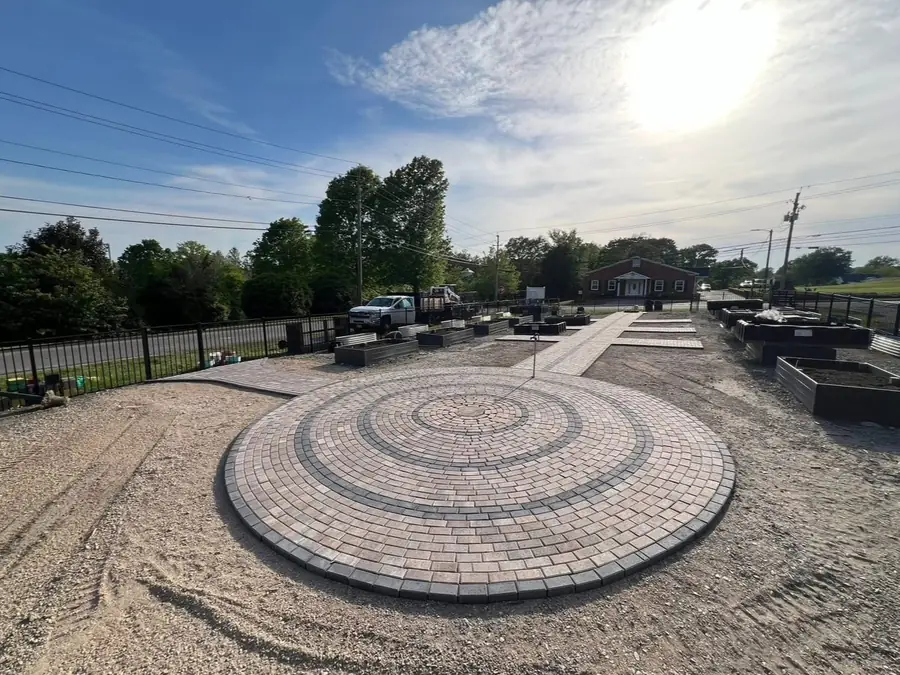
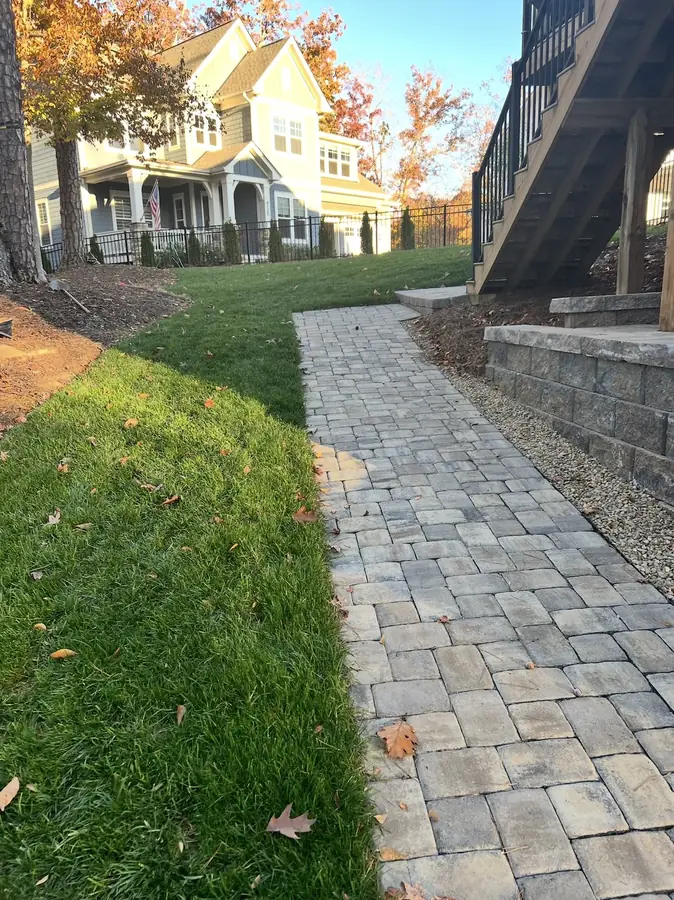
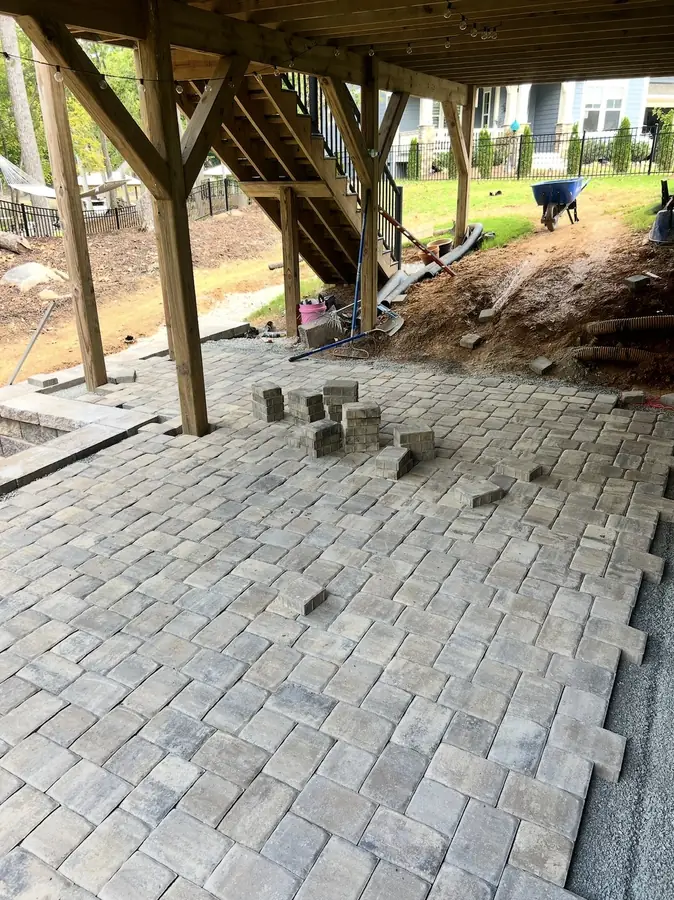
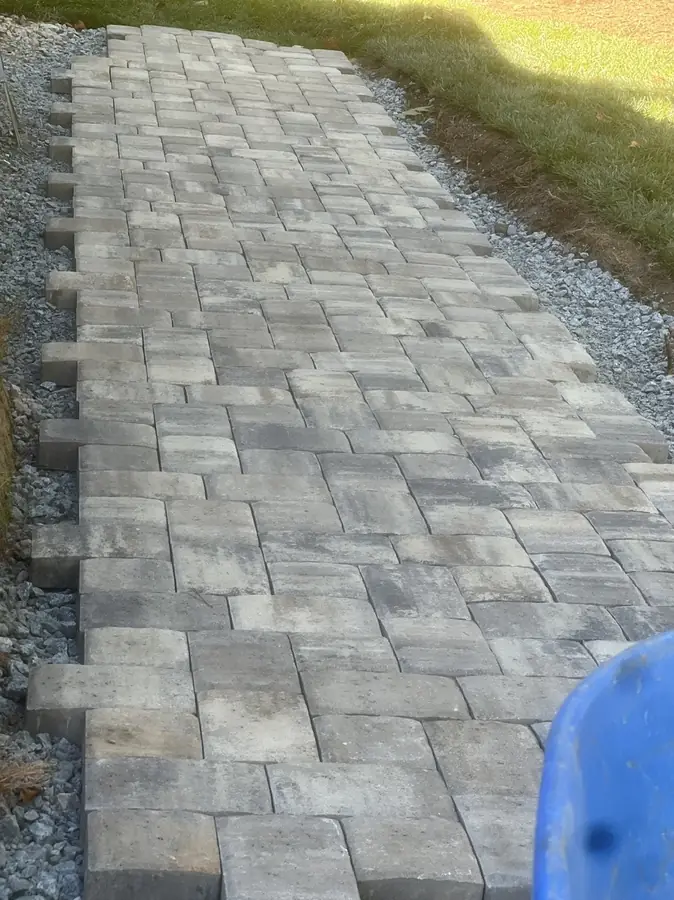
The base is the whole job
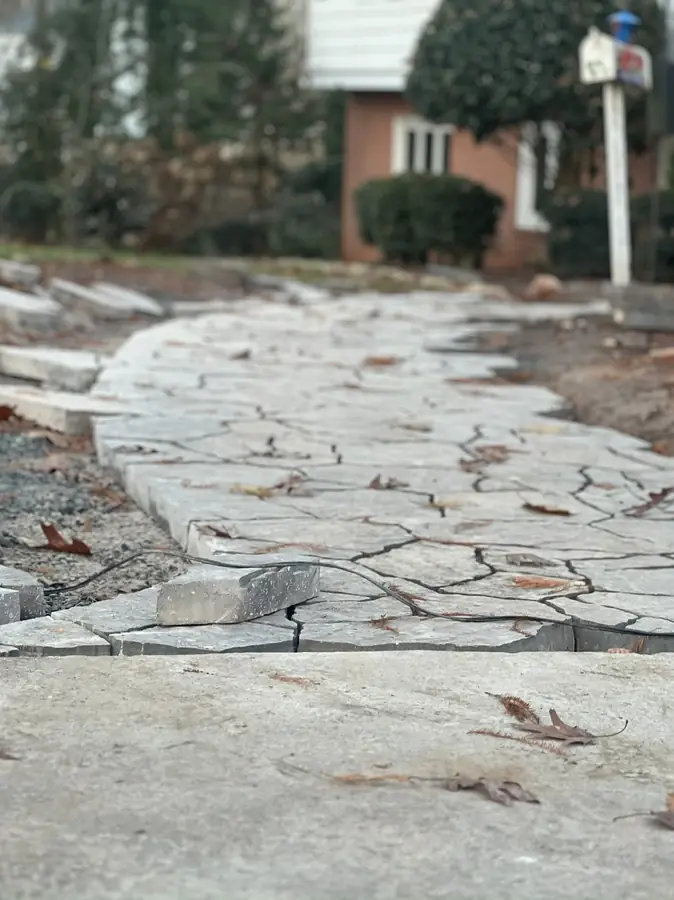
Almost every failed patio around here failed the same way: pavers laid on a few inches of loose screenings. Looks great for two summers, then the low corner starts holding water and the edges wander.
We dig it out — six to eight inches of crushed stone, compacted in lifts, pitched to drain away from your foundation. It's the least photogenic part of the project and the only part that decides whether you're calling somebody in five years.
- Compacted stone base, built in lifts
- Pitched about ¼" per foot so water leaves
- Saw-cut borders and edge restraint that holds
Pavers or flagstone?
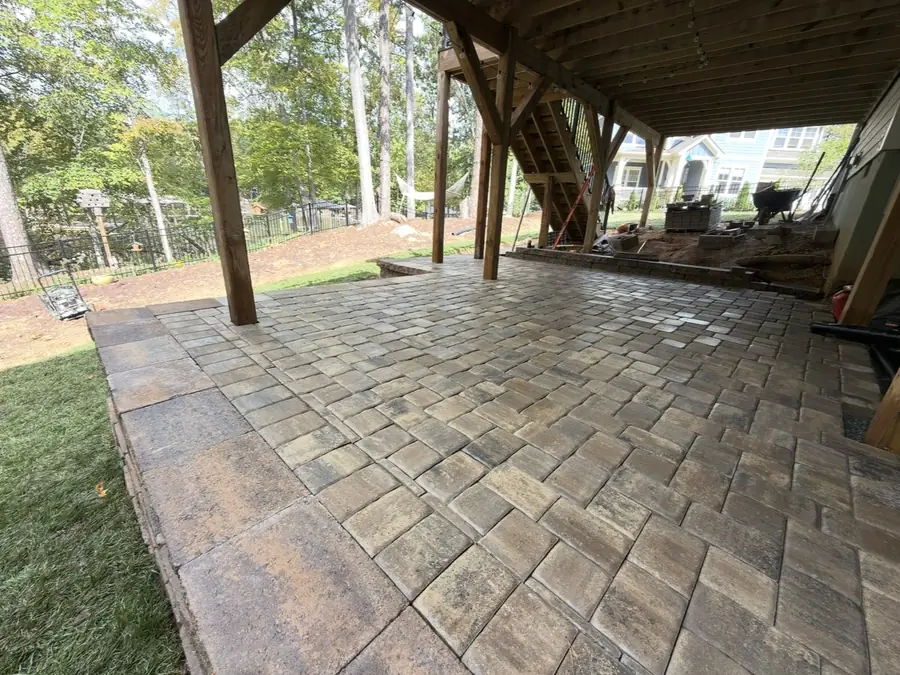
Pavers are consistent, faster to install, easier to repair, and cost less per square foot — a strong fit for newer homes.
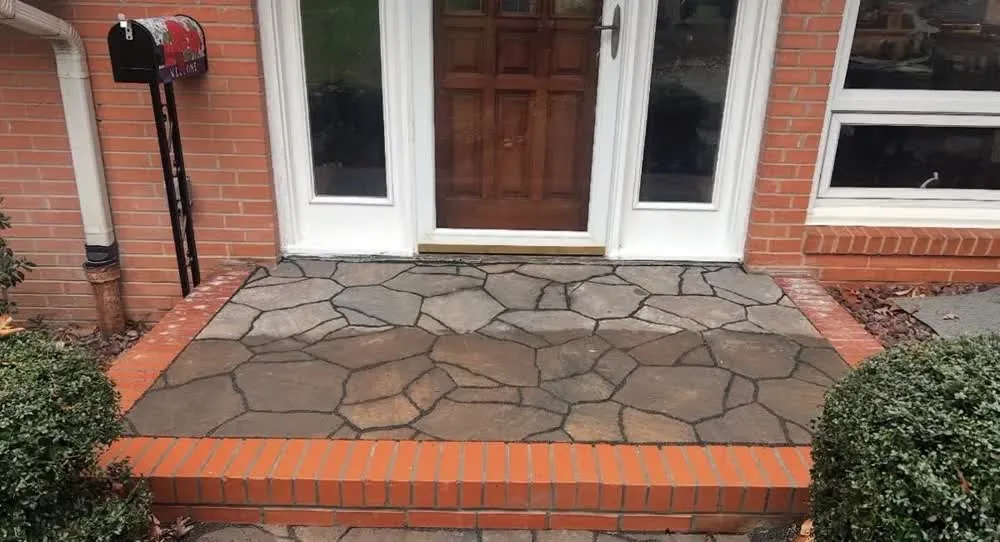
Flagstone is irregular and hand-cut, so it takes longer and costs more. On older homes and stone-fronted houses, it's usually worth it.
What it costs
Most patios land between $2,000 and $25,000.
We won't fake a number over text — access, grade and tear-out change everything. But you shouldn't walk in blind either.
- Small walkways and landings sit at the low end
- Slope, tear-out and tight access push it up
- Material choice moves it either direction